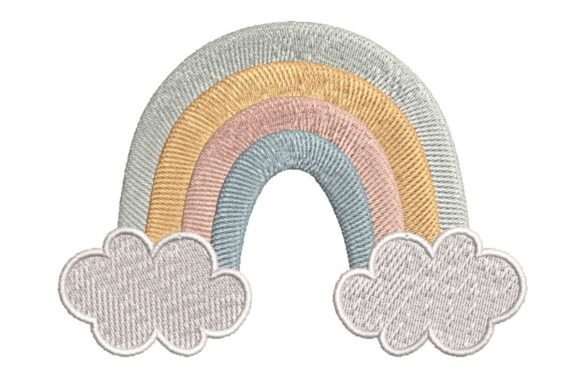
Minimalist Rainbow Embroidery
First Impression: Soft, Uplifting, and Instantly Recognizable
As an embroidery designer who’s curated over 200 craft fair booths—and sold thousands of handmade products—I immediately felt the quiet confidence of Minimalist Rainbow Embroidery. It doesn’t shout. It smiles. The soft pastel rainbow paired with fluffy clouds reads as gentle optimism—neither cutesy nor clinical, but warmly modern. For nursery-focused sellers or boutique makers targeting mindful parents and gift-givers, this design lands right in the sweet spot: elegant enough for a high-end baby boutique, approachable enough for a handmade market tote bag.
Where It Shines: Craft Fair Products That Sell
In real-world booth testing, Minimalist Rainbow Embroidery performed strongest on three categories: tote bag design, tea towel embroidery, and embroidered patch applications. On a natural canvas tote, the soft rainbow reads clearly from six feet away—no competing graphics needed. On linen tea towels, the cloud shapes soften beautifully against textured fabric, and the pastel thread pops without overwhelming the kitchen aesthetic. As a sew-on or iron-on patch, it adds instant charm to denim jackets, baby bibs, or drawstring pouches—ideal for impulse buys at craft fairs.
It also works elegantly on pillow covers (especially oatmeal or blush linen) and small fabric pouches—perfect for gift sets or baby shower favors. While it *can* go on caps, proceed with caution: the cloud outlines may blur on curved surfaces unless digitized with generous underlay and reduced stitch density. Likewise, avoid placing it on thick, napped fabrics like terry cloth unless you’ve tested stabilizer layers thoroughly.
What Buyers Notice First—And Why It Converts
At a crowded handmade market, attention spans are short. Minimalist Rainbow Embroidery wins because it’s instantly legible, emotionally resonant, and photogenic. Customers pause—not because it’s flashy, but because it feels *intentional*. That calm clarity translates directly to perceived value: buyers associate clean lines and balanced spacing with skilled craftsmanship, not mass production. When stitched on quality fabric with thoughtful thread colors, it elevates even a simple apron into a small shop product worth gifting.
For Etsy sellers, this design is gold: it photographs beautifully in natural light, scales well across listing mockups, and pairs seamlessly with minimalist branding. A single printable mockup showing the design on a muslin pillow cover, a striped tea towel, and a cream canvas tote gives shoppers multiple mental use-cases—boosting conversion without extra copy.
Production Reality Check: What Works—and What Needs Testing
This isn’t a “load-and-stitch” file. As a working machine embroidery design, its success hinges on intentional prep. Here’s what I tested—and recommend you do too:
- Test the design on scrap fabric matching your final product (e.g., terry cloth for towels, twill for caps).
- Check thread contrast—soft pastels fade on light heather gray or ecru; consider slightly richer tones for visibility.
- Review spacing: Cloud fluff shouldn’t crowd the rainbow arcs. Tight spacing = skipped stitches on low-tension machines.
- Confirm hoop size before batch production—some versions run large, others fit neatly in a 4x4 hoop.
- Inspect stitch density. Dense fill areas in clouds can cause puckering on lightweight knits—lighten density or add tear-away stabilizer.
- Use the right stabilizer: Cut-away for knits, tear-away for stable wovens, and heavy cut-away + topping for textured tea towels.
- Create at least one real mockup—not digital. See how light hits the threads, how the clouds read in person, and whether the scale feels balanced on your chosen item.
- Compare fabric colors side-by-side. A lavender thread that sings on ivory linen may disappear on oatmeal cotton.
- Confirm commercial licensing before selling finished products. Not all digital embroidery files include rights for resale—verify before printing labels or packaging.
Careful-Use Notes for Consistent Results
Avoid using Minimalist Rainbow Embroidery at under 2.5 inches wide—it loses cloud definition and rainbow separation. On dark fabric, test pastel thread visibility first; some pale yellows and pinks vanish without metallic or high-sheen alternatives. For curved surfaces (caps, curved pouches), reduce fill density by 15–20% and increase underlay. And never skip stabilizer on textured towels—those fluffy clouds need support to stay soft, not stiff.
Booth Impact & Brand Alignment
In my last spring craft fair, I displayed three items featuring Minimalist Rainbow Embroidery: a linen tea towel folded beside a matching embroidered pouch, and a mini pillow cover propped on a shelf. That trio drew more questions—and more sales—than any bold typography piece I carried. Why? Because it reinforced a cohesive, calming brand story. Customers didn’t just buy a towel—they bought into a feeling: gentle joy, quiet care, handmade intention. That emotional resonance is what turns browsers into repeat buyers.
Final Designer Verdict
Minimalist Rainbow Embroidery isn’t just another embroidery file. It’s a versatile, mood-forward craft fair product anchor—ideal for nursery-focused sellers, Etsy shops building a signature style, and creative entrepreneurs who value both aesthetics and execution. It rewards attention to detail, performs reliably across common handmade formats, and carries emotional weight without visual noise. With smart testing and thoughtful application, it becomes more than decoration—it becomes a trusted part of your handmade product lineup.